
Intranet Search and Navigation: Best Practices to Improve Intranet Findability

Many intranets fail because employees can’t find the information they need. This article explains how to improve intranet search and navigation by addressing root causes such as poor content governance, weak information architecture, unclear navigation, and ineffective search. It shares practical intranet findability best practices, showing how to design navigation and search in the right order and why continuous improvement is essential for creating a trusted, productive intranet.

Many organizations invest heavily in their intranet—yet employees still say the same thing: “I can’t find what I’m looking for.” That frustration isn’t just a usability issue. Poor intranet search and navigation directly affects productivity, employee experience, and trust in the digital workplace.
The good news? Improving intranet findability doesn’t start with buying a better search engine or redesigning menus. It starts with governance, structure, and a clear understanding of how employees actually look for information.
In this article, we outline proven intranet navigation best practices and intranet search best practices, showing how to improve intranet search and navigation in the right order—and how to turn your intranet into a findable, reliable source of truth.
Why Intranet Search and Navigation Matter
More Than Ever Modern workplaces are information-dense. Employees work across locations, roles, and tools—often under time pressure. When intranet search and navigation fail, the consequences are tangible:
✔ Employees waste time searching instead of working.
✔ Critical information is missed or re-created.
✔ Trust in the intranet erodes.
✔ Engagement and employee experience suffer.
Intranet findability is therefore not just about UX. It’s about enabling efficient workflows, supporting decision-making, and creating a digital workplace employees rely on every day.?
The Most Common Causes of Poor Intranet Findability
Before looking at solutions, it’s important to understand why intranet search and navigation fail in the first place. In most organizations, the root causes fall into five categories.
1. Ungoverned Content
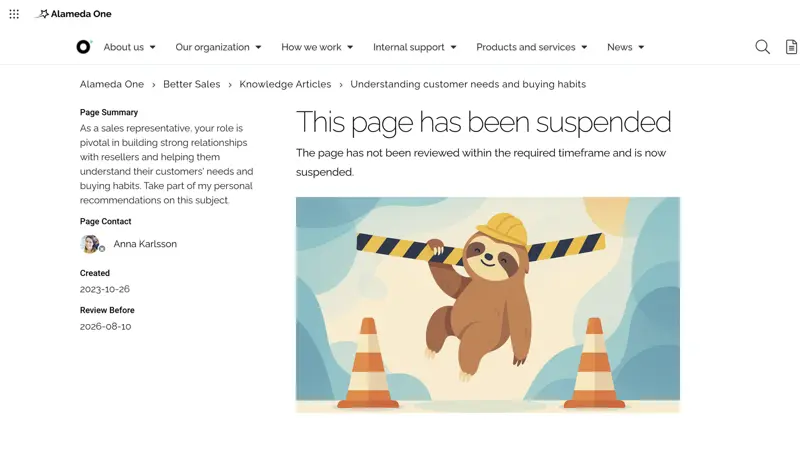
Without a clear content governance strategy, ownership, review cycles, and lifecycle management remain undefined. Over time, outdated, duplicate, or conflicting information stays published, cluttering the intranet and reducing trust.
2. Lack of Metadata, Structure, and Context
Content is often published without consistent metadata, summaries, headings, or page structure. This makes information harder to scan, filter, and assess relevance—even when the content itself is accurate and useful.
3. Inconsistent Information Architecture
A common mistake is organizing content around ownership (HR, IT, Finance) rather than user needs. This leads to overlapping topics, unclear content types, and inconsistent labels—making it difficult for employees to understand where information belongs.
4. Unclear or Inconsistent Navigation
Navigation structures and labels frequently reflect internal organization instead of how employees think and work. As a result, users struggle to browse, orient themselves, and locate essential information.
5. Ineffective or Poorly Configured Search
Search may exist, but is poorly tuned—relying on exact keywords, weak relevance ranking, and limited filters. Without proper tagging and categorization, search results become noisy, hard to refine, and often abandoned.
These issues are closely connected. Fixing search alone will not solve poor findability if governance, structure, and navigation remain weak.
Where to Start: A Best-Practice Approach to Improve Intranet Findability
Organizations that successfully improve intranet search and navigation follow a clear, structured approach. The key is to address root causes before tools.
Step 1: Conduct a Content Audit
Start by understanding your current state.
✔ What content exists—and where?
✔ What is outdated, redundant, missing, or conflicting?
✔ Which content is actually used, and which is ignored?
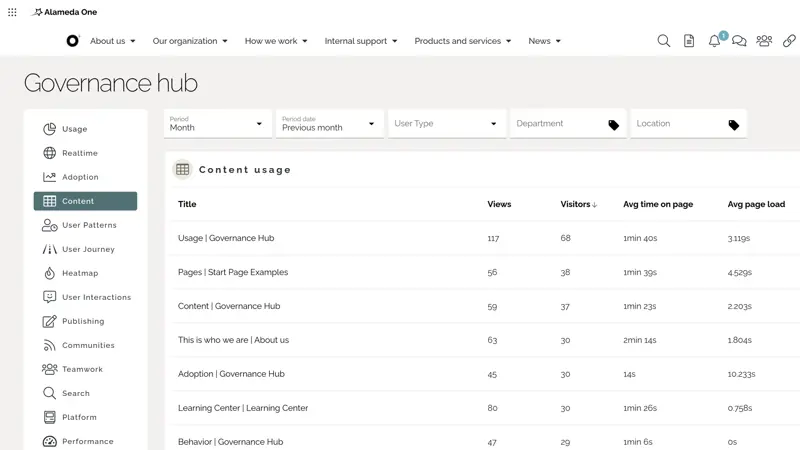
Combine content inventory with usage data, user journeys, and engagement insights. This creates a factual foundation for all findability improvements.
Step 2: Establish a Governance Plan
Governance is the backbone of intranet findability. Key elements include:
✔ A sustainable information architecture based on content purpose and lifecycle.
✔ Standardized content types, layouts, naming conventions, and metadata.
✔ Clear ownership and editorial roles.
✔ Defined review cycles and archiving rules.
A simple but powerful principle applies here: Don’t plan how to structure content—plan how users should be able to find it.
Intranet Navigation Best Practices
Navigation is a support mechanism—not the foundation. When governance and structure are in place, navigation becomes easier to design and maintain.
Essential Navigation Best Practices
Every intranet should provide clear, predictable navigation patterns:
✔ Global navigation for company-wide information
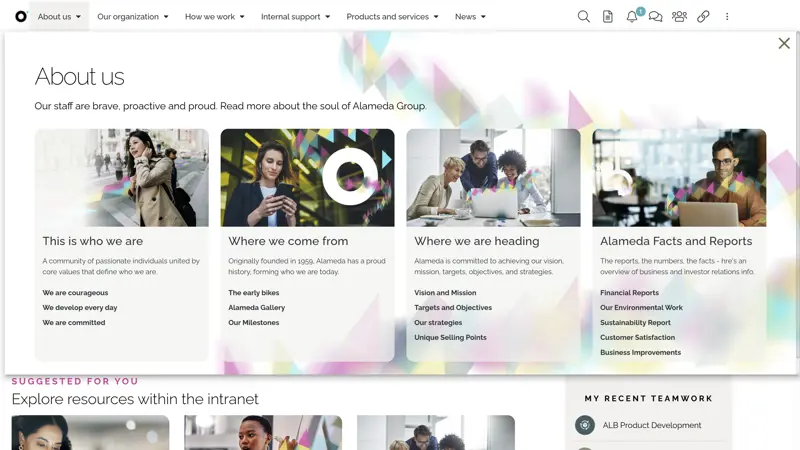
✔ Mega menus for content-heavy areas
✔ Landing pages as centralized entry points for key topics
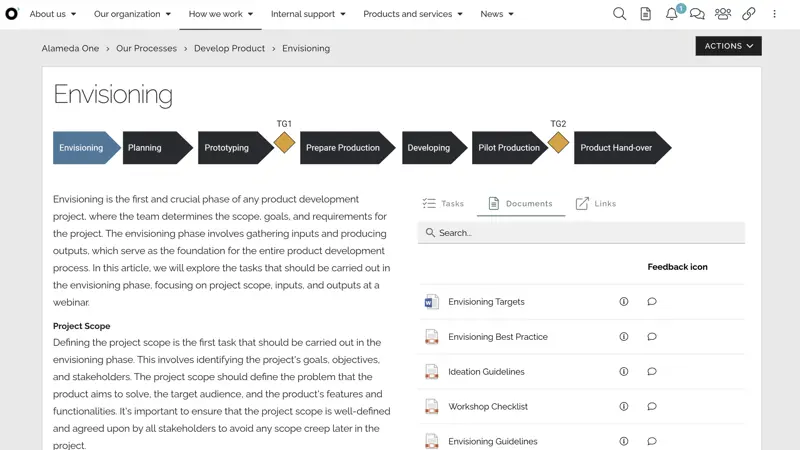
✔ Current navigation and breadcrumbs to help users understand where they are
A key best practice is to manage navigation separately from content structure. This allows navigation to evolve without forcing content to move every time the user's needs change.
Advanced Navigation Best Practices
As intranet maturity grows, navigation can become more adaptive:
✔ Directory navigation for people, teams, projects, or resources
✔ Visual navigation using icons, images, or process maps
✔ Personalized navigation with shortcuts and recent content
✔ Role-based navigation tailored to job roles or locations
✔ AI-powered recommendations based on behavior
These approaches reduce cognitive load and help employees reach relevant information faster—without overwhelming them.
Intranet Search Best Practices
Search is often the most visible part of findability—and the most misunderstood. Effective intranet search depends heavily on governance, metadata, and structure.
Essential Intranet Search Best Practices
At a minimum, intranet search should support:
✔ Global and quick search
✔ “Did you mean” spelling correction
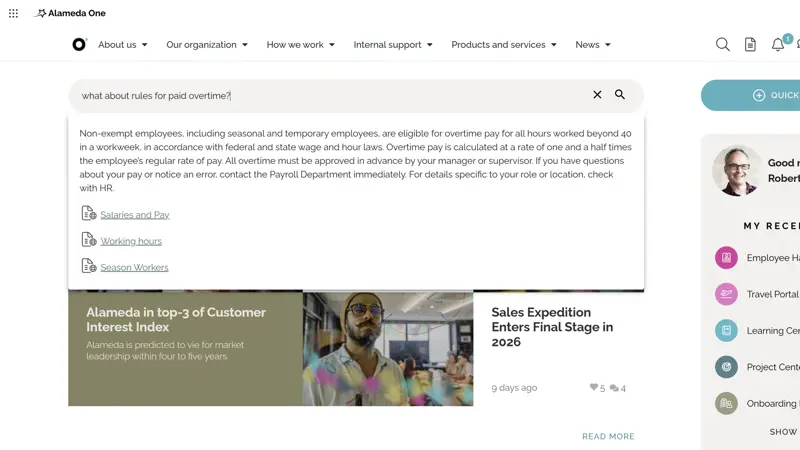
✔ Search-as-you-type suggestions
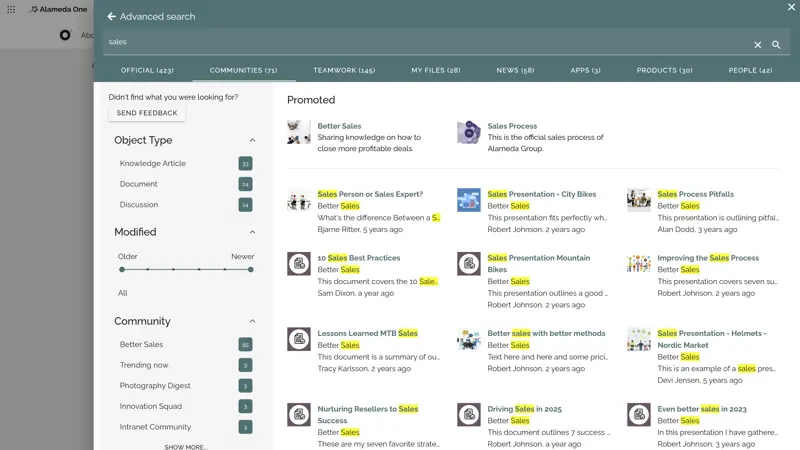
✔ Advanced search with categories and refiners
✔ Consistent search across desktop, mobile, and Teams
These features help users refine results and understand what content is available.
Advanced Intranet Search Best Practices
More mature intranets extend search into a strategic capability:
✔ Search feedback to capture user input
✔ Promoted search results (best bets)
✔ Dedicated search experiences (e.g. Find a colleague)
✔ Integration with business systems and external sources
✔ Search analytics to identify gaps and issues
✔ AI-powered semantic search that understands intent and context
Semantic search is especially powerful—but only when built on strong metadata, structure, and governance.
Continuous Improvement: Intranet Findability Is an Ongoing Capability
One of the most important intranet findability best practices is recognizing that findability is never “done.” Sustainable improvement requires:
✔ Clear ownership for search, navigation, and governance
✔ Continuous monitoring of content status and usage
✔ Regular analysis of search queries and no-result searches
✔ User feedback through polls, surveys, and usability testing
✔ Ongoing refinement of content, navigation, and search
When treated as an operating model—not a project—findability improves steadily over time.
Key Takeaways: How to Improve Intranet Search and Navigation
✔ Intranet search and navigation are business issues, not just UX concerns
✔ Governance and information architecture come before menus and search engines
✔ Navigation supports findability—search reinforces it
✔ Continuous ownership and measurement are essential
Organizations that follow these principles create intranets that employees trust, use, and rely on.
Take the Next Step
If your organization is looking to improve intranet search and navigation and apply proven intranet findability best practices, the next step is to assess your current governance, structure, and user experience.
Explore how a modern intranet platform can support:
✔ Structured governance and content lifecycles
✔ User-centric navigation
✔ Powerful, insight-driven search
✔ Continuous measurement and improvement
A findable intranet isn’t just easier to use—it’s a foundation for productivity, engagement, and long-term success.
To get more hands-on advice, book a free 30-minute session with an intranet expert to discuss next steps.