
Knowledge and Content Management in Intranet Platforms: What Matters in 2026—and Where Gaps Remain

Knowledge and content management remain foundational capabilities in intranet and employee experience platforms—but maturity, consistency, and long-term scalability vary widely across the market. This article explores how knowledge and content management are evolving in intranet platforms in 2026, where platforms are delivering real value, where gaps persist, and how organizations should plan for sustainable content practices as part of a modern intranet strategy.

Who this article is for: This article is for knowledge management professionals, content owners, and intranet teams responsible for creating, governing, and maintaining trusted content at scale.
What this article helps with: It clarifies how intranet platforms support sustainable knowledge and content management in practice—including lifecycle management, ownership, governance, and content quality—and where organizations should focus effort to avoid unmanaged growth, information decay, and loss of trust.
Knowledge and content management sit at the heart of most intranet experiences. Policies, procedures, guidelines, reference materials, and shared expertise are often the primary reasons employees visit the intranet. When this content is accurate, well structured, and easy to maintain, the intranet becomes a trusted source of truth. When it is not, confidence erodes, findability suffers, and workarounds emerge across email, chat, and shared drives.
In recent years, content volumes have continued to grow, publishing has become more decentralised, and expectations around findability and accuracy have increased. At the same time, many organizations have realised that traditional and often informal approaches do not scale in distributed digital workplaces. In response, intranet vendors have started strengthening governance tools, lifecycle management features, and analytics, while AI is beginning to support tagging, maintenance, and optimisation.
However, these capabilities remain inconsistent across platforms, and many products still treat knowledge and content as a repository rather than a managed asset. This article examines how knowledge and content management capabilities are being delivered in intranet platforms in 2026, based on independent product evaluations and market analysis from ClearBox Consulting’s Intranet & Employee Experience Platforms 2026 report, combined with over 20 years of hands-on experience designing and managing enterprise intranet solutions.
Main findings – how knowledge and content management are evolving in intranet platforms
Knowledge and content management remain foundational intranet capabilities, but the 2026 market findings show wide variation in how well platforms support them. While most intranet solutions provide basic publishing and document storage, fewer deliver the structure, governance, and lifecycle controls required to manage knowledge effectively over time.
Knowledge and content management maturity varies widely across platforms
Some intranet platforms offer comprehensive support for structured knowledge bases, governed publishing, and lifecycle management. Others rely primarily on generic pages or document libraries, leaving organizations to compensate through manual processes or external tools. As a result, while most intranets contain knowledge, far fewer actively support sustainable knowledge management practices.
Evergreen content is essential—but often poorly supported
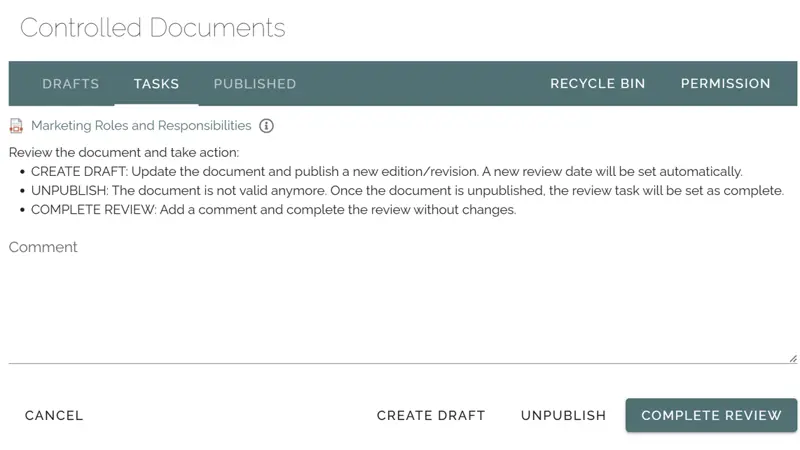
Evergreen content such as policies, procedures, standards, and reference materials remains one of the most important intranet content types. Unlike news, this content must remain accurate and trusted over long periods of time. However, many platforms still prioritise news publishing over reference content, using the same tools and templates for both. Without structure and differentiation, evergreen content becomes harder to maintain and easier to overlook.
Content lifecycle management is improving—but remains inconsistent
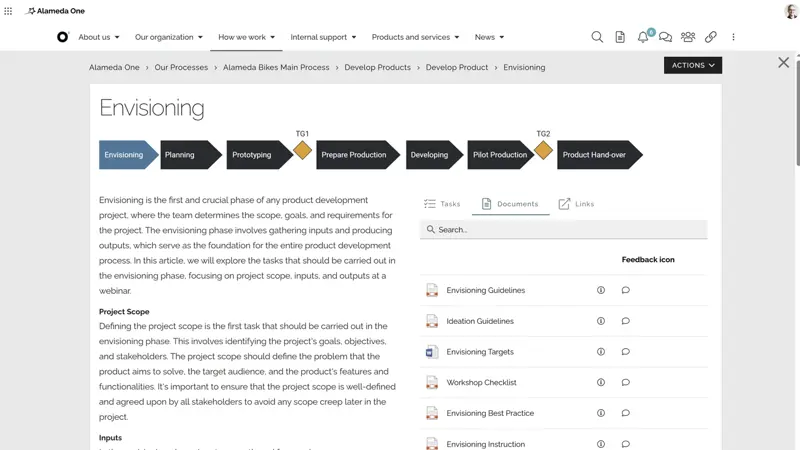
Lifecycle management capabilities have improved in recent years, with some platforms offering review dates, expiry handling, ownership indicators, and notifications. A smaller number provide dashboards and bulk-editing tools that help administrators manage content at scale. In many platforms, however, lifecycle management remains largely manual, making it difficult to prevent content decay as volumes grow.
Governance is a stronger differentiator than features alone
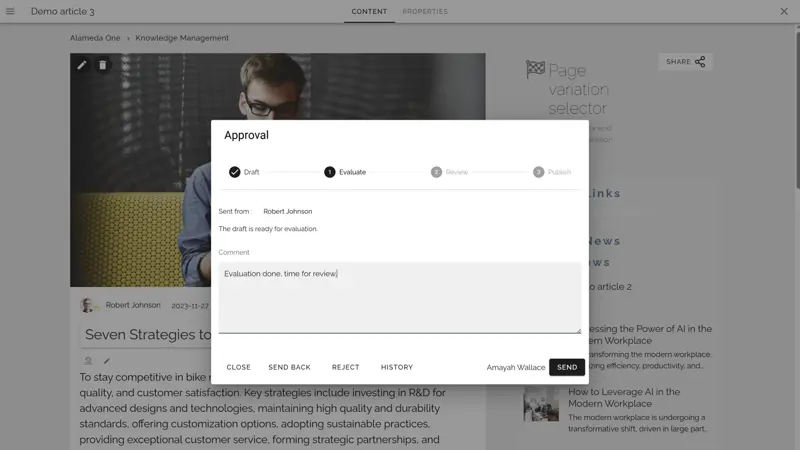
Successful knowledge management depends as much on governance as on technology. Platforms that support clear ownership models, decentralised publishing with controls, and transparent approval workflows tend to deliver more consistent outcomes. Where governance tooling is weak, informal processes often break down over time—regardless of how modern the interface appears.
Analytics for knowledge content remains underdeveloped
While analytics for communications have improved, analytics for knowledge and reference content remain limited. Many platforms provide basic usage metrics but lack insights that help content owners assess relevance, risk, or effectiveness. Emerging AI-supported analytics show promise, but are not yet consistent or widely available.
AI is beginning to support—but not replace—knowledge management
AI is increasingly used to assist with metadata tagging, content classification, and identification of outdated or duplicate content. These capabilities can reduce manual effort and improve consistency, but they do not eliminate the need for ownership, governance, and quality standards. AI is most effective when it supports structured knowledge practices rather than attempting to automate them away.
Where knowledge and content management capabilities are heading
Knowledge and content management on intranet platforms is shifting from static publishing to more structured, governed, and continuously managed systems.
From content repositories to managed knowledge systems
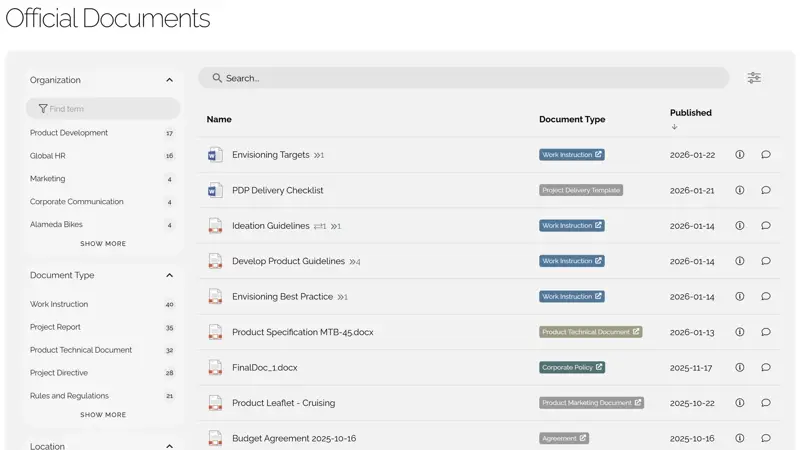
Platforms are moving away from collections of standalone pages toward structured knowledge systems with defined templates, navigation models, and relationships between content types. This improves maintainability, consistency, and trust—while reducing duplication and fragmentation.
Greater automation of content lifecycle management
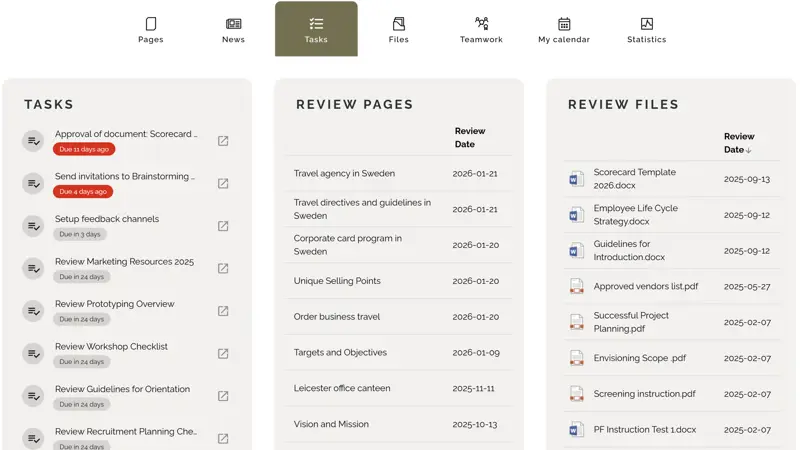
Lifecycle management is becoming more proactive, with stronger tools for review reminders, risk dashboards, and bulk updates. The focus is on making maintenance easier and more visible, rather than relying on individual memory or periodic clean-ups.
AI is strengthening governance and quality control
AI is increasingly used to support governance through automatic tagging, duplication detection, and quality checks. In stronger implementations, AI highlights risks and opportunities while keeping decision-making in human hands.
Knowledge is becoming tightly connected to search and discovery
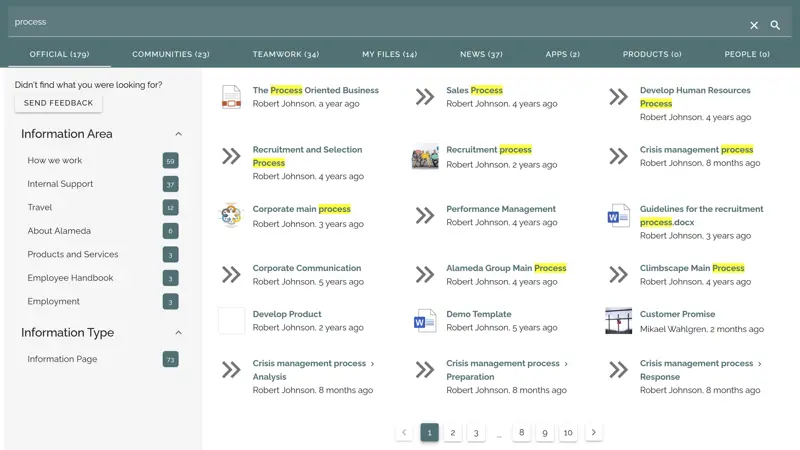
Knowledge management and intranet search are converging. Well-structured, governed knowledge content is prioritised in search results and AI-generated answers, reinforcing the principle that good findability starts with good knowledge management.
Analytics evolving from reporting to decision support
Analytics are gradually shifting from basic reporting to insight-driven decision support. Over time, AI-supported analytics are expected to help content owners identify gaps, prioritise improvements, and manage knowledge more proactively.
How organisations should use this information when planning knowledge and content management
To plan sustainable knowledge and content management, organisations should:
✔ Define what qualifies as knowledge, and distinguish evergreen content from news.
✔ Establish clear ownership and accountability for critical knowledge content.
✔ Evaluate lifecycle management support, including review dates and bulk updates.
✔ Align knowledge design with intranet search and findability strategies.
✔ Use analytics to guide continuous improvement, not just reporting.
✔ Introduce AI deliberately, using it to support governance rather than replace it.
Conclusion: Knowledge management succeeds through structure, ownership, and discipline
Knowledge and content management are not solved by publishing more content or adding AI features alone. Sustainable intranet success depends on clear structure, defined ownership, and continuous maintenance—supported by platform capabilities that make governance and lifecycle management practical at scale.
The 2026 market findings show that while intranet platforms are improving, significant gaps remain, particularly around content lifecycle management, analytics, and governance consistency. Organisations that treat knowledge management as a long-term operating capability—rather than a one-off initiative—are best positioned to build trusted, resilient intranets that employees rely on over time.
Strong knowledge management does not exist in isolation. It depends on how content quality, search and findability, governance, and platform ownership work together across the wider intranet ecosystem.
To understand how knowledge and content management connect with related capabilities, explore our articles on Information Finding and Search, AI in Intranet Platforms, digital workplace integrations and services, and Communications Management.
Explore the full 2026 intranet landscape
This article is part of a series analysing the key scenarios from the independent Intranet & Employee Experience Platforms 2026 report by ClearBox Consulting.
👉 For a broader perspective, read this blog summarising the series and explaining how the presented scenarios and capabilities fit together—or download the full Intranet & Employee Experience 2026 report to benchmark intranet platforms across all scenarios.