
Platform Management and Governance in Intranet Platforms: Why Execution Matters More Than Ever in 2026

Platform management and governance are rarely the most visible parts of an intranet—but they are among the most decisive for long-term success. While user-facing capabilities such as AI, communications, and search often receive the most attention, governance, administration, and operating models determine whether an intranet can scale, remain trusted, and deliver value over time. This article explores how platform management and governance are evolving in intranet platforms in 2026, where maturity varies across the market, and how organizations should approach execution more deliberately when planning or improving their intranet.

Who this article is for: This article is for intranet managers, platform owners, digital workplace leads, and governance stakeholders responsible for running, scaling, and continuously improving the intranet over time.
What this article helps with: It explains why platform management and governance have become critical success factors for modern intranets, and how admin experience, analytics, operating models, and ownership structures directly influence adoption, quality, and long-term sustainability.
Strong intranet experiences depend on what happens behind the scenes. Even the best-designed intranet will quickly lose value without clear ownership, manageable publishing models, and visibility into how the platform is actually being used. In practice, many challenges labelled as “low adoption” or “content sprawl” stem from weak governance and limited administrative support rather than user experience design.
In recent years, intranet platforms have invested heavily in end-user experiences, while platform management and governance capabilities have evolved more unevenly. Publishing has become more decentralised, content volumes have increased, and expectations around measurement, accountability, and continuous improvement have risen. As a result, platform management is no longer a background concern—it is a strategic capability that determines whether an intranet can be sustained, scaled, and improved over time.
This article examines how platform management and governance capabilities are being delivered in intranet platforms in 2026, based on independent product evaluations and market analysis from ClearBox Consulting’s Intranet & Employee Experience Platforms 2026 report, combined with over 20 years of hands-on experience designing, implementing, and governing enterprise intranet solutions.
Main findings – how platform management and governance are evolving in intranet platforms
Platform management and governance show some of the widest maturity gaps across intranet platforms. While most solutions provide basic administration and configuration tools, far fewer support scalable governance models, actionable analytics, and efficient day-to-day management—particularly in decentralised environments.
Admin experience quality varies significantly across platforms
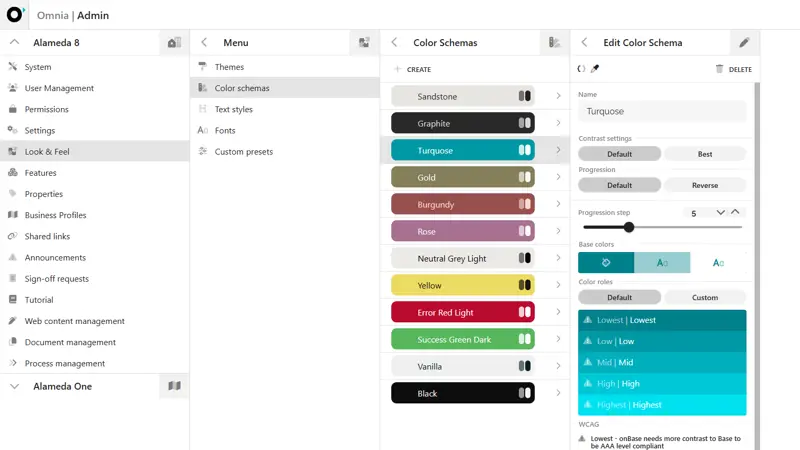
One of the most consistent findings is the uneven quality of admin experiences. Some platforms offer clear, intuitive admin interfaces with well-organised configuration options, templates, and guidance. Others expose administrators to fragmented menus, technical complexity, or workflows that feel disconnected from how intranets are actually run.
In many cases, strong end-user experiences mask weak admin experiences. This creates risk for organizations, particularly when governance responsibilities are shared across communications, HR, IT, and business units. When administration is hard to understand or maintain, governance becomes reactive rather than proactive.
Decentralised publishing increases governance pressure
Most modern intranets rely on decentralised publishing models to scale content creation. While this approach improves relevance and ownership, it also increases the need for clear governance controls.
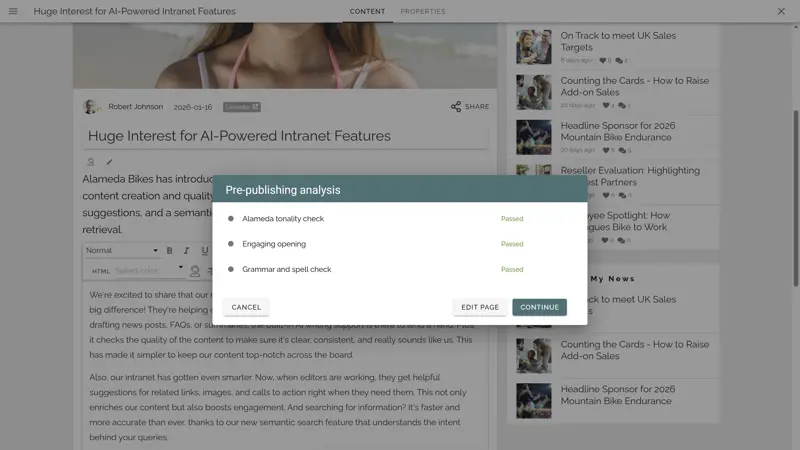
Platforms vary widely in how well they support decentralised governance. Some provide role-based permissions, approval workflows, templates, and guardrails that make good publishing behaviour easy. Others rely on informal processes or external documentation, which often break down as the intranet grows. The findings reinforce that decentralisation without governance leads to inconsistency and content sprawl.
The homepage and navigation control are differentiators
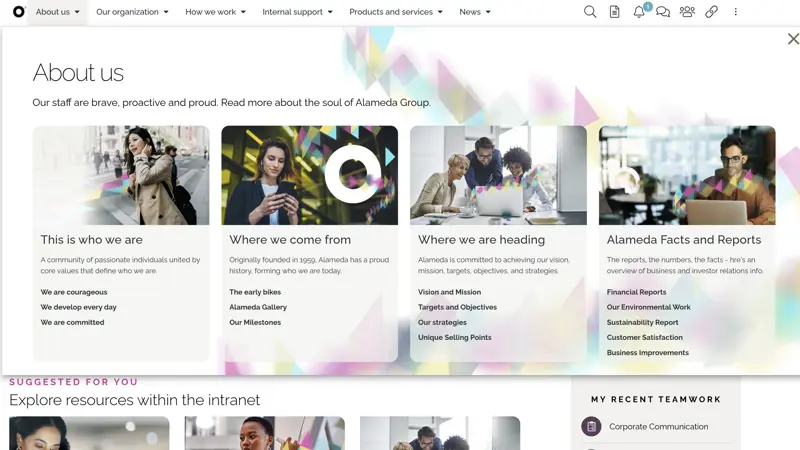
Control over homepages, landing pages, and navigation structures remains an important aspect of platform management. Some intranet platforms offer highly flexible design and layout options, while others rely on fixed or feed-driven structures.
Both approaches can work, but problems arise when the platform does not align with organisational needs. Limited control can restrict communication and wayfinding, while excessive flexibility without guidance can lead to inconsistent experiences. The strongest platforms balance flexibility with structure, helping administrators create clear, usable entry points without overengineering.
Branding and multi-brand support are expected—but not equal
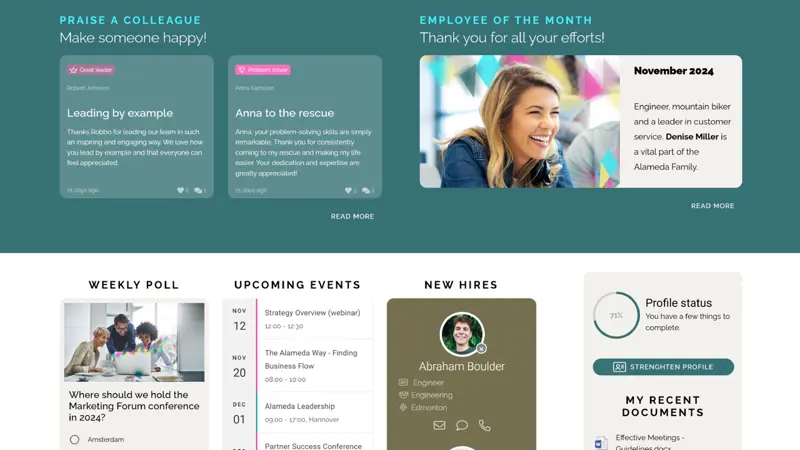
Most intranet platforms now support basic branding, but depth varies significantly. Some offer only logo and colour changes, while others support more advanced design systems, sub-brands, and location-specific experiences.
For organisations with multiple business units, geographies, or sub-brands, these differences matter. Branding capabilities often correlate with broader design flexibility and admin maturity, making them an important consideration beyond visual identity alone.
Analytics for platform management remains inconsistent
Analytics is one of the weakest and most inconsistent areas in platform management. In contrast, many platforms provide basic usage metrics; fewer offer insights that help administrators understand adoption, behaviour patterns, or governance risks.
Some platforms integrate with external analytics tools or allow custom dashboards, but this often requires technical expertise and additional effort. Native, actionable analytics that support continuous improvement remain the exception rather than the norm—despite being critical for operating an intranet effectively at scale.
AI support for admins is emerging—but early
AI is beginning to appear in platform management, primarily through analytics assistance, metadata tagging, and content lifecycle support. A small number of platforms offer AI-driven insights that help administrators identify underperforming content, usage trends, or optimisation opportunities.
However, these capabilities are still emerging and uneven across the market. Most organisations should view AI for admin support as an accelerator—not a replacement—for governance models, skills, and ownership.
Where platform management and governance capabilities are heading
Platform management is becoming more central to intranet value, and several clear directions are shaping how governance capabilities are evolving.
From configuration to continuous optimisation
Intranet administration is shifting from one-time configuration toward continuous optimisation. Future-ready platforms are designed to support ongoing tuning, monitoring, and improvement rather than static setup. This includes better visibility into usage, clearer feedback loops, and tools that help administrators act on insights rather than collect data.
Governance embedded into everyday workflows
Governance is increasingly being built into publishing and management workflows rather than being treated as a separate process. Templates, guardrails, approval flows, and contextual guidance help ensure quality without adding unnecessary friction.
This approach supports scale by making the “right” way to publish and manage content the easiest option.
Analytics evolving into decision support
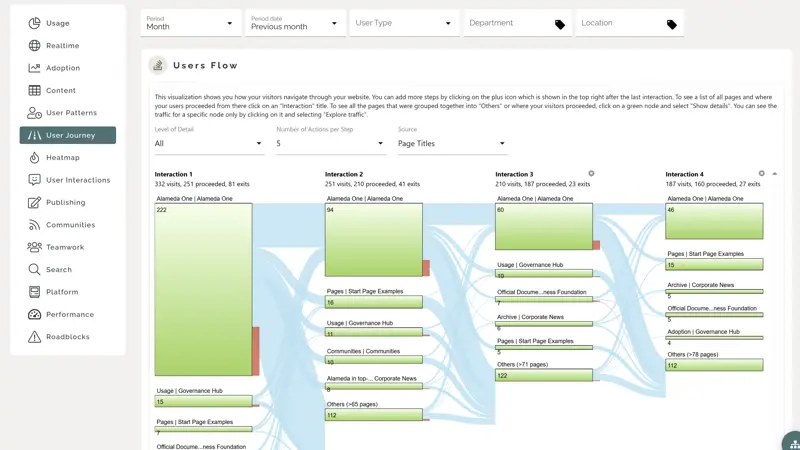
Platform analytics are gradually moving beyond reporting toward decision support. Over time, AI-assisted insights are expected to highlight risks, opportunities, and priorities automatically—helping intranet teams focus effort where it matters most.
This shift is critical for organisations managing large, complex intranets with limited central resources.
AI assisting admins—not replacing governance
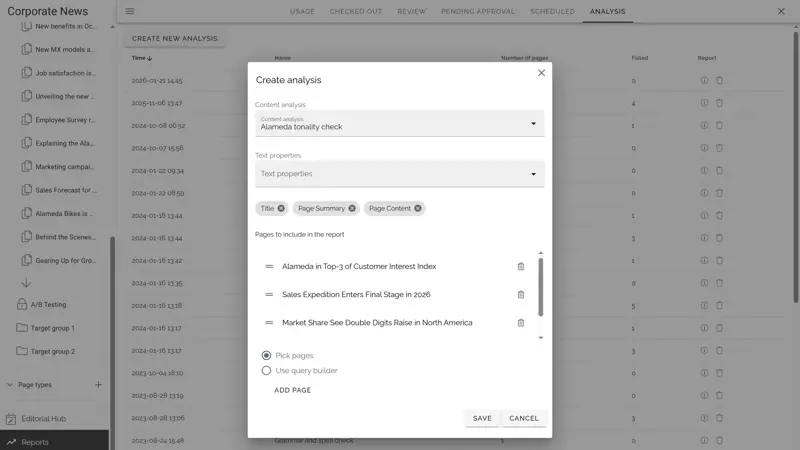
AI will increasingly support administrators by simplifying analysis, surfacing insights, and reducing manual effort. However, successful platforms treat AI as a governance aid rather than an autonomous decision-maker.
Clear controls, transparency, and human oversight remain essential—particularly when AI influences content visibility or lifecycle decisions.
How organisations should use this information when planning platform management and governance
When planning a new intranet or improving governance for an existing one, organisations should:
✔ Define an intranet operating model early, including ownership, roles, and responsibilities.
✔ Assess admin usability, not just end-user experience, during platform evaluation.
✔ Plan governance for decentralisation, with clear guardrails and support.
✔ Evaluate analytics capabilities based on actionability, not volume of data.
✔ Introduce AI cautiously, using it to support governance rather than bypass it.
✔ Treat governance as a continuous discipline, not a launch-phase activity.
Conclusion: Strong intranets are governed intranets
Platform management and governance are not optional overhead—they are foundational to sustainable intranet success. The 2026 market findings show that while user-facing intranet experiences have improved significantly, many organisations remain constrained by weak administrative tooling, limited analytics, and underdeveloped governance and operating models.
The most effective intranet platforms treat governance as a strategic capability embedded in the platform, not as an afterthought managed through manual processes. When ownership is clear, administration is manageable, and analytics provide actionable insight, intranets are far more likely to remain relevant, trusted, and valuable over time.
Strong governance does not exist in isolation. Long-term intranet success depends on how governance, analytics, and operating models support every other capability across the platform.
To understand how this platform management and governance connect with capabilities and shifts within other use cases, please check out our blog posts on AI in intranet platforms, communications management, information finding and search, and knowledge and content management.
Explore the full 2026 intranet landscape
This article is part of a series analysing the key scenarios from the independent Intranet & Employee Experience Platforms 2026 report by ClearBox Consulting.
👉 Read this blog post for an overview of key intranet capabilities and how they fit together—or download the full Intranet & Employee Experience 2026 report to benchmark intranet platforms across all scenarios.
Updated
July 2026