
Architecting the Future Workforce: How the Intranet Enables Workforce Transformation

This article explores why many future workforce initiatives fail to deliver impact—and how the intranet helps close the gap between strategy and execution. It shows how connecting learning, knowledge sharing, and expertise through the intranet enables a more agile and scalable future workforce. With practical examples, the article explains how organizations can turn workforce transformation ambitions into everyday capability.
Organizations are investing heavily in reskilling, digital tools, and transformation initiatives to prepare for the future workforce. Yet many of these efforts stall—not because ambition is lacking, but because learning, knowledge, and expertise remain fragmented across systems and teams.
A successful workforce transformation strategy depends on one critical factor: connection. Employees must be able to develop skills, find expertise, and learn from one another as part of everyday work.
This is where the intranet plays a strategic role. Used well, the intranet becomes the architecture that connects people, skills, and knowledge—turning future workforce ambition into operational capability.
Future Workforce: Why Workforce Transformation Often Falls Short
Despite strong intent, many organizations face the same structural challenges when it comes to preparing employees for future leadership roles. Common struggles include:
✔ Fragmented learning: Skill development scattered across platforms, tools and teams.
✔ Hidden expertise: Key knowledge lives with individuals and remains invisible to others.
✔ Disconnected collaboration: Community collaboration operate outside daily workflows.
✔ Limited skill visibility: Organizations lack a clear view of existing competencies.
When learning, knowledge, and people are disconnected, workforce transformation becomes difficult to scale. But the intranet can help bridge these gaps and help develop a strong future workforce.
The intranet is not just another digital workplace tool. It is the connective layer that brings together learning, collaboration, and expertise in one coherent experience.
By acting as shared infrastructure, the intranet helps organizations move from isolated initiatives to a sustainable future workforce model—one that supports growth, mobility, and execution at scale.
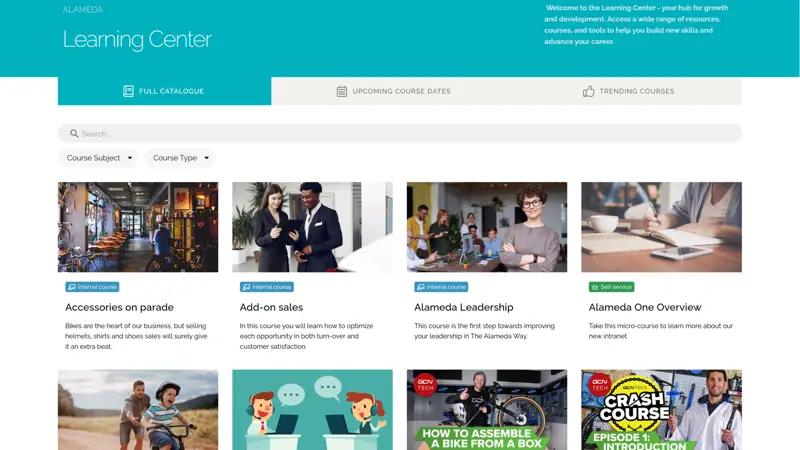
Intranet Learning Centers Support Continuous Skills Development
A modern intranet learning center provides a single, trusted entry point for skill development. Instead of forcing employees to navigate multiple systems, learning becomes accessible, contextual, and aligned with real work.
✔ Centralized learning: Employees find relevant learning content in one trusted location
✔ Role-based development: Learning paths align with roles, skills, and strategic priorities
✔ Embedded growth mindset: Skill development becomes part of everyday work.
This approach turns the intranet into a true skills development intranet, supporting continuous learning rather than one-off training programs.
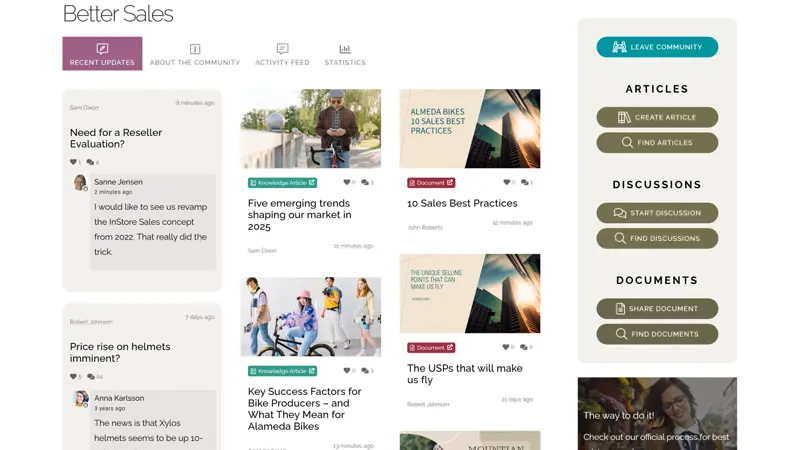
Intranet Communities Turn Knowledge into a Shared Asset
Formal learning alone cannot prepare the future workforce. Much of what employees need to know is learned through experience, dialogue, and collaboration. Intranet communities for knowledge sharing enable employees to:
✔ Peer-to-peer learning: Employees exchange experience, insights, and hands-on advice.?
✔ Knowledge continuity: Critical expertise is captured and shared before it disappears.
✔ Cross-team collaboration: Learning extends beyond organizational silos and boundaries.
By embedding communities into the intranet, knowledge sharing becomes part of daily work—not an optional extra.
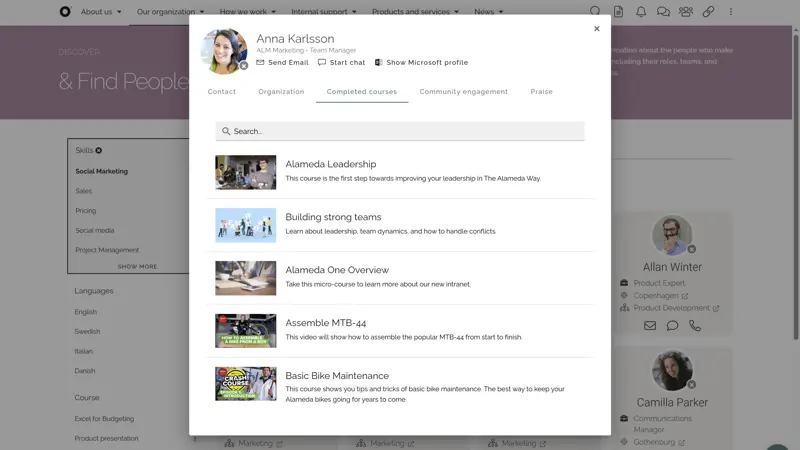
Making Skills and Expertise Visible with Rich Profiles
Workforce transformation fails when organizations cannot see what skills already exist. Rich intranet profiles change this by making competence, experience, and interests visible across the organization.
When combined with competence based people search, employees and leaders can quickly find the right expertise to solve problems, support projects, and develop talent.
✔ Skill visibility: Expertise becomes searchable and accessible across teams and locations.
✔ Faster collaboration: Employees find experts, mentors, and contributors without friction.
✔ Stronger mobility: Internal opportunities align better with skills and aspirations.
The improved access to employees and their knowledge, certifications, languages, and more supports smarter decisions and a more agile future workforce.
From Future Workforce Ambition to Everyday Execution
The future workforce is not built through isolated learning programs or disconnected tools. It is built when learning, knowledge sharing, and expertise discovery are connected in daily work.
The intranet provides the structure to make this connection possible—supporting workforce transformation that is practical, scalable, and measurable.
✔ Connected capability: Skills, knowledge, and people align around real business needs
✔ Scalable execution: Workforce transformation becomes structured and repeatable.
✔ Sustainable growth: Learning and collaboration continue as strategies evolve.
Organizations that succeed with the future workforce do not rely on programs alone. They invest in structure. By using the intranet as workforce architecture, leaders create an environment where people can continuously learn, collaborate, and contribute—turning transformation strategy into everyday execution.
Ready to discuss future workforce architecture??Please reach out to?set up a free 30-minute discussion with an intranet expert.?
Learn more:?This blog post is one of four in our series "Turning Strategy into Execution: How the Intranet Powers Modern Organizations". Take part of the other articles here:?
✔ Leadership Communication: How Strategic Storytelling Turns Strategy into Belief?
✔ AI in the Digital Workplace: How the Intranet Helps AI Deliver Real Value
✔ Leadership Development at Scale: How Intranets Builds Stronger Leaders from Within