
Leadership Development at Scale: How Intranets Builds Stronger Leaders from Within


This article explains why many leadership development initiatives fail to scale—and how the intranet helps turn isolated programs into a sustainable leadership pipeline. It shows how embedding learning, guidance, communities, and visibility into everyday work enables continuous leadership development. With practical examples, the article helps organizations understand how to build stronger leaders from within and support strategy execution with confidence and consistency.
Leaders make strategy real. Yet many leadership development efforts fail to produce consistent results because they rely on isolated programs, classroom sessions, or one-off initiatives.
If leadership is central to execution, then developing leaders must be continuous, practical, and connected to everyday work. The challenges organizations face—limited visibility into potential, fragmented guidance, and inconsistent support—are not people problems. They are structure problems.
This article explains how a leadership development intranet supports leadership growth at scale by connecting learning, community, guidance, and visibility—turning isolated programs into a sustainable pipeline of leaders.
Why leadership development often falls short
Despite strong investment, many leadership development efforts struggle for the same reasons:
✔ Fragmented guidance: Leadership support lives in manysystems with no single home.
✔ Limited visibility: Potential leaders remain hidden because skills aren’t mapped clearly.
✔ Inconsistent context: Managers get mixed messages about expectations and priorities.
✔ Siloed learning: Formal programs do not connect to daily work or peer learning.
These gaps slow leadership pipeline development and reduce the impact of leadership investments.
The Intranet as a Leadership Development Platform
The intranet is already where people work, learn, find information, and collaborate. This makes it a natural foundation for leadership development intranet support that is embedded in everyday work—not separated from it.
✔ Continuous development: Leadership support is ongoing rather than a one-off program.
✔ Role relevance: Guidance reflects real leadership roles, challenges, and daily decisions.
✔ Organizational visibility: Leadership knowledge is shared across teams and locations.
✔ Strategic alignment: Leadership development supports strategy execution and priorities.
By embedding leadership support in the intranet, organizations make leadership development accessible exactly where and when it’s needed—turning intent into consistent practice.
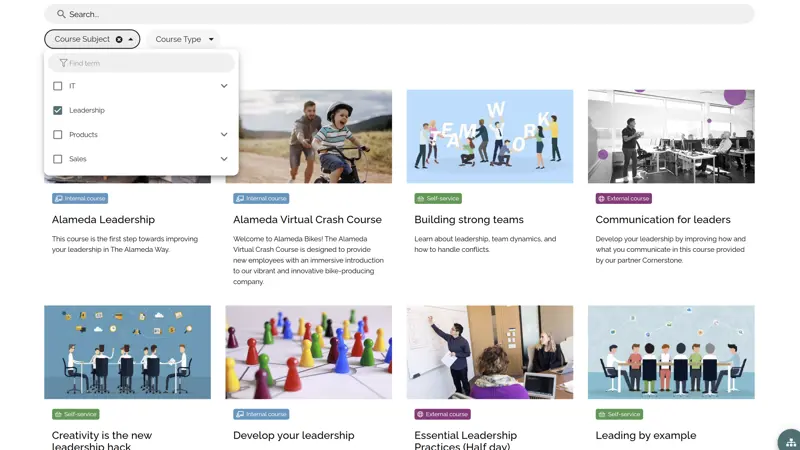
1. Intranet learning centers that support leadership skills
Leadership development should map to practical capability, not abstract competency lists. A leadership development intranet provides structured support that leaders can use on the job:
✔ Role-based learning: Leadership paths tailored to managers and executives alike.
✔ Practical resources: Job aids, frameworks, and real examples at leaders’ fingertips.
✔ Continuous progression: Learning aligned to career stages, not single courses.
When leaders find what they need in the flow of work, development becomes a natural part of leadership practice.
2. Leader communities that enable peer learning
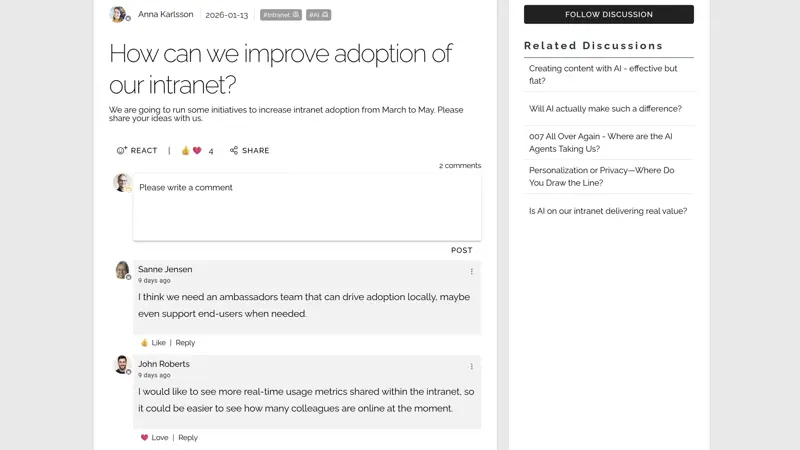
Leadership can be isolating. When leaders are disconnected from peers, decisions become harder and confidence wanes. Leader communities on the intranet change that.
✔ Shared experience: Managers exchange insights, challenges, and lessons learned
✔ Cross-organizational learning: Leaders connect beyond functional boundaries
✔ Collective problem-solving: Communities become sources of practical solutions
Peer communities strengthen leadership culture and equip leaders to act with more confidence and clarity.
3. A manager handbook as a trusted daily guide
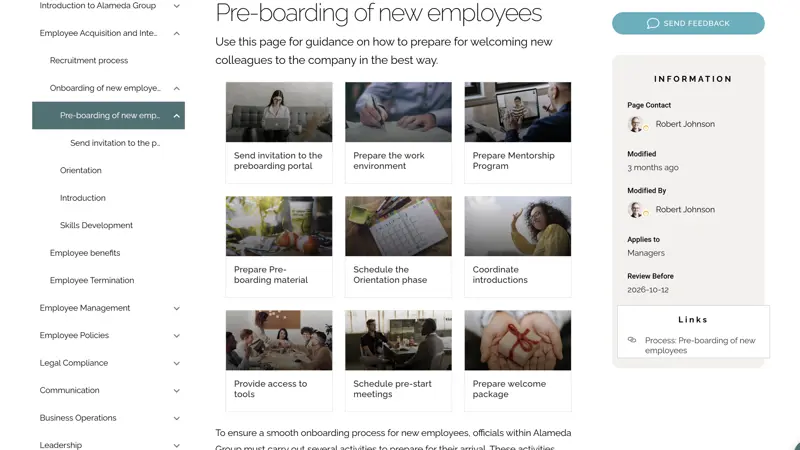
Leaders don’t only learn in workshops—they learn in the moment. A manager handbook intranet provides consistent, accessible guidance when decisions are being made.
✔ Clear expectations: Leaders know what good looks like and how to act.
✔ Accessible support: Guidance is available where leaders work, not buried in PDFs.
✔ Decision frameworks: Practical tools help leaders make better, faster choices.
When managers can find trusted answers in the intranet, leadership becomes less reactive and more intentional.
4. Making leadership potential visible
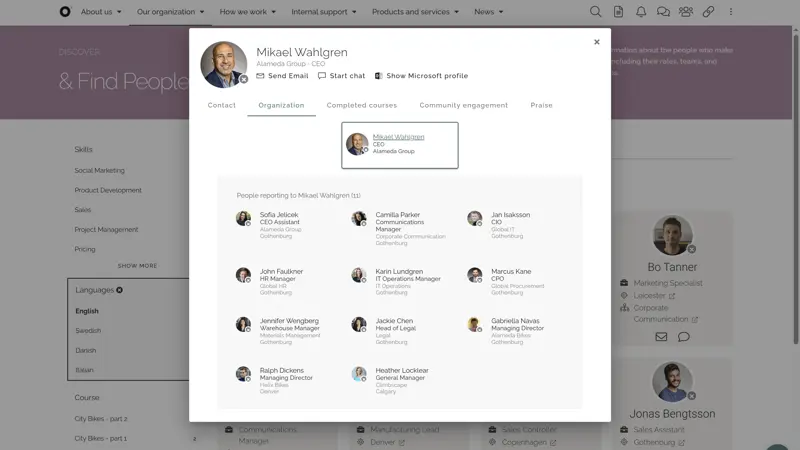
Leadership development depends on recognizing potential early and supporting growth over time. Rich profiles and competence based people search let organizations:
✔ Surface emerging talent: Future leaders become visible across divisions.
✔ Support mobility: Skills and aspirations align with leadership opportunities.
✔ Match mentors and mentees: Connections form naturally through competence search.
When potential is visible, leaders can be developed intentionally rather than discovered by chance.
From Isolated Programs to a Sustainable Leadership Development Pipeline
Successful leadership development is not a series of events. It is an operating capability embedded into everyday work.
When leadership support lives in the intranet:
✔ Continuous learning: Leadership development happens over time, not in isolated events.
✔ Accessible guidance: Leaders find trusted support easily, not hidden in documents.
✔ Connected leaders: Communities replace isolation with shared learning and experience.
✔ Shared ownership: Leadership development becomes collective, not individual.
This is how organizations build leaders who can execute strategy with clarity, confidence, and consistency.
Leadership development works best when it is continuous, visible, and embedded in real work. A leadership development intranet helps organizations scale leadership capability by providing learning, community, guidance, and visibility—turning individual programs into a sustainable pipeline of leaders.
Ready to discuss Leadership Development? Please reach out to set up a free 30-minute discussion with an intranet expert.
Learn more: This blog post is one of four in our series "Turning Strategy into Execution: How the Intranet Powers Modern Organizations". Take part of the other articles here:
✔ Leadership Communication: How Strategic Storytelling Turns Strategy into Belief
✔ Architecting the Future Workforce: How the Intranet Enables Workforce Transformation
✔ AI in the Digital Workplace: How the Intranet Helps AI Deliver Real Value