
Employee Experience in Intranet Platforms: What Drives Real Impact in 2026—and What to Focus on Next
Employee experience has become the primary lens through which intranet platforms are evaluated. In 2026, organisations are no longer asking whether an intranet has enough features—but whether the platform meaningfully improves how employees experience their daily workflows. This article explores how employee experience capabilities are being delivered in intranet platforms in 2026 and how organizations should focus on outcomes rather than isolated functionality.

Who this article is for: This article is for employee experience leaders, HR and internal communications teams, digital workplace owners, and intranet managers responsible for improving everyday employee experience at scale.
What this article helps with: It clarifies how intranet platforms contribute to employee experience in practice—and how experience outcomes emerge from the interaction between usability, relevance, governance, and integration rather than from individual features.
Employee experience is no longer shaped by a single system or interaction. It emerges across a wide range of everyday moments: finding information, understanding priorities, completing tasks, receiving communication, accessing services, and feeling connected to the organisation.
As work has become more hybrid and distributed, intranets have re-entered the spotlight—not as static portals, but as platforms that influence how work feels, flows, and functions.
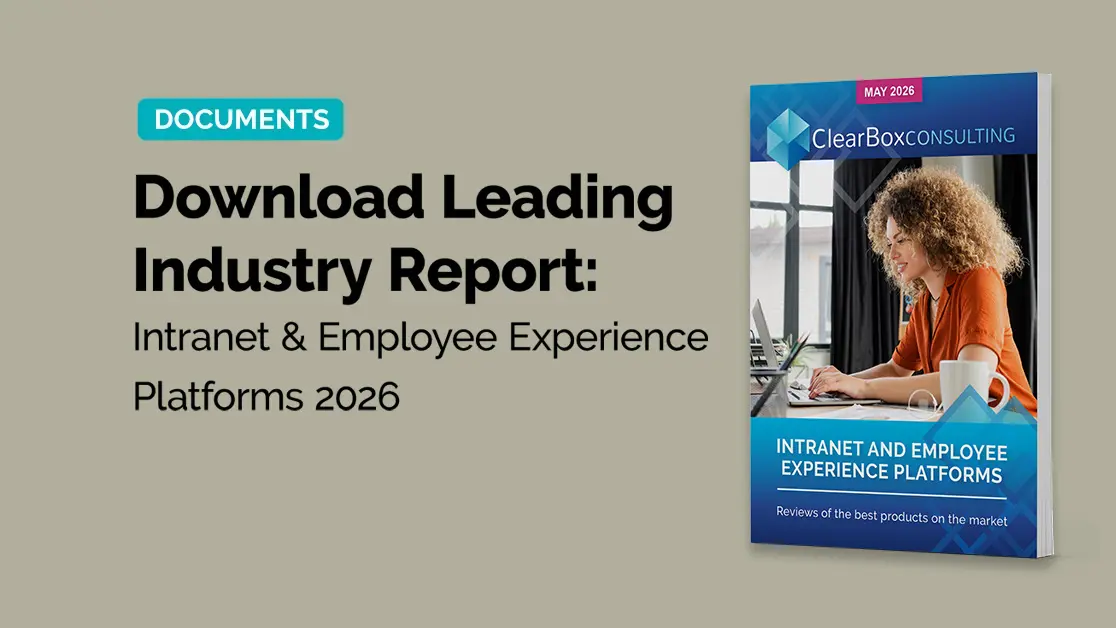
In 2026, employee experience is increasingly used as a benchmark outcome for intranet platforms. Yet the ClearBox Intranet & Employee Experience Platforms 2026 report shows that while nearly all vendors position themselves as “employee experience platforms”, their ability to deliver consistent, measurable experience outcomes varies significantly.
This article examines how employee experience is being shaped by intranet platforms in 2026, based on independent product evaluations and market analysis from ClearBox Consulting. The text highlights what distinguishes platforms that deliver real EX impact, where gaps remain, and how organizations should use these insights when planning or evolving their intranet strategy. To learn more, download the Intranet & Employee Experience Platforms 2026 report.
Main findings – how employee experience is delivered in intranet platforms
Across platforms reviewed for the 2026 report, employee experience is rarely delivered through a single capability. Instead, it emerges from how well multiple capabilities work together—and how deliberately they are governed and evolved.
Employee experience is increasingly scenario-driven, not feature-led
The strongest intranet platforms are shifting away from generic “one-size-fits-all” experiences toward scenario-based delivery. Rather than focusing on feature breadth, they prioritise how well the platform supports key employee moments such as onboarding, role-based work, frontline access, or service interactions. Platforms that organise experiences around employee journeys—rather than content structures—are better positioned to deliver relevance and reduce friction.
Personalisation improves—but relevance still depends on structure
Most platforms now support some level of personalisation based on role, location, or organisational context. However, personalisation alone does not guarantee a good experience.
The 2026 findings show that relevance depends just as much on underlying information architecture, governance, and content quality. Platforms that combine personalisation with strong content models, clear ownership, and analytics deliver more consistent experience outcomes than those relying on algorithmic feeds alone.
Usability and findability remain foundational EX drivers
Despite advances in AI and interface design, basic usability and findability continue to be decisive factors for employee experience. Poor navigation, inconsistent terminology, or unreliable search undermine trust quickly—regardless of how polished the interface appears. Platforms that treat findability, navigation, and clarity as core experience elements consistently outperform those that treat them as technical concerns.
Mobile experience increasingly defines perceived employee experience
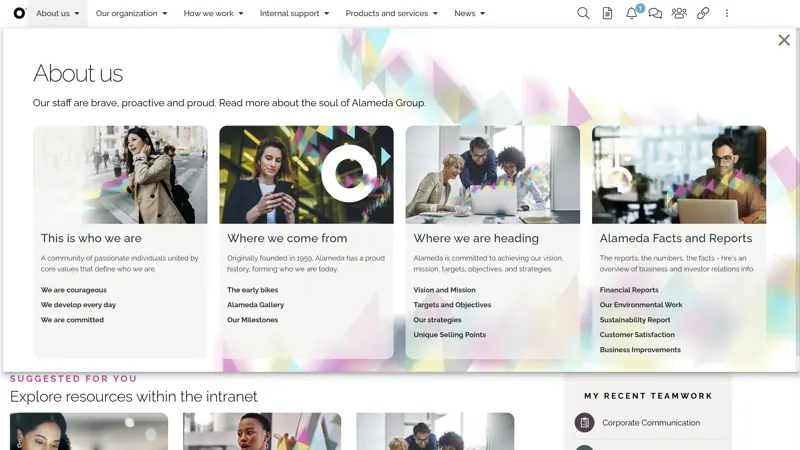
For organisations with frontline or deskless workers, the mobile experience is effectively the employee experience. The 2026 report shows that platforms with weak mobile usability struggle with adoption—even when desktop experiences are strong. Employee experience outcomes are therefore closely tied to how well intranets support mobile-first access, onboarding, notifications, and task completion.
Governance has a direct impact on experience quality
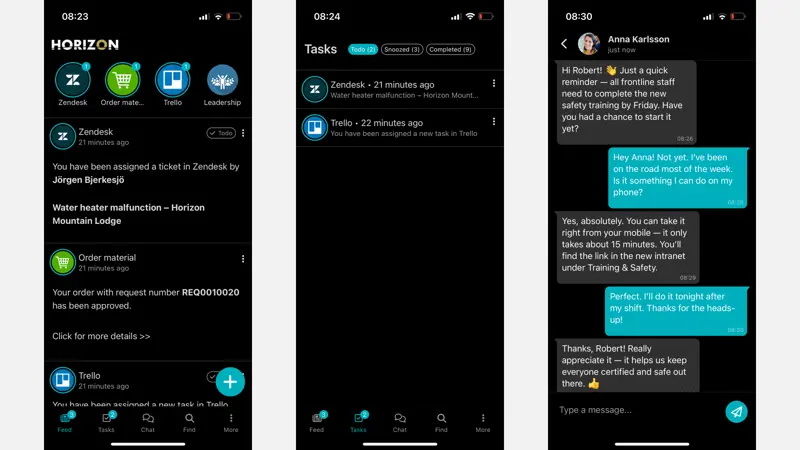
One of the clearest findings across scenarios is that governance directly affects employee experience. Intranets with unclear ownership, unmanaged publishing models, or limited analytics often deliver inconsistent, confusing experiences—even when feature sets are strong.
Employee experience is not only designed at launch but also maintained through governance, lifecycle management, and continuous improvement.
Where employee experience capabilities are heading
Rather than converging on a single “EX platform model,” intranet platforms are evolving toward more pragmatic, experience-focused approaches grounded in everyday workflows.
From generic portals to experience orchestration
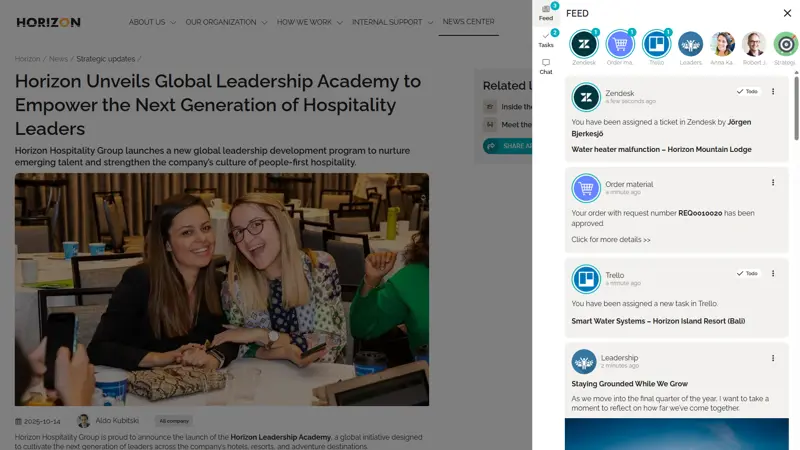
Intranets are increasingly positioned as orchestration layers that connect communication, services, knowledge, and tasks into coherent experiences. The focus is shifting from “where content lives” to “how employees move through work.” This shift reinforces the importance of integration, findability, and contextual delivery rather than standalone experience features.
Experience measured through behaviour, not sentiment alone
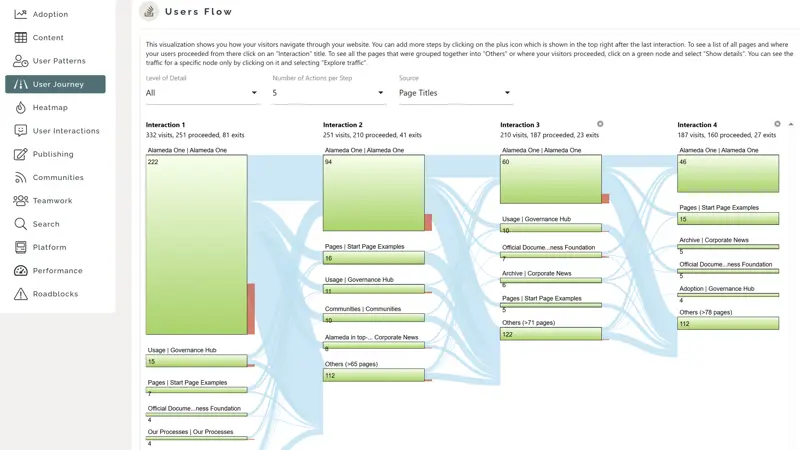
Employee experience measurement is gradually expanding beyond surveys and sentiment scores. Leading platforms increasingly combine qualitative feedback with behavioural data such as task completion, content usage, and journey drop-off. This allows organisations to identify friction points and prioritise improvements based on evidence rather than assumptions.
AI supports experience optimisation—not experience ownership
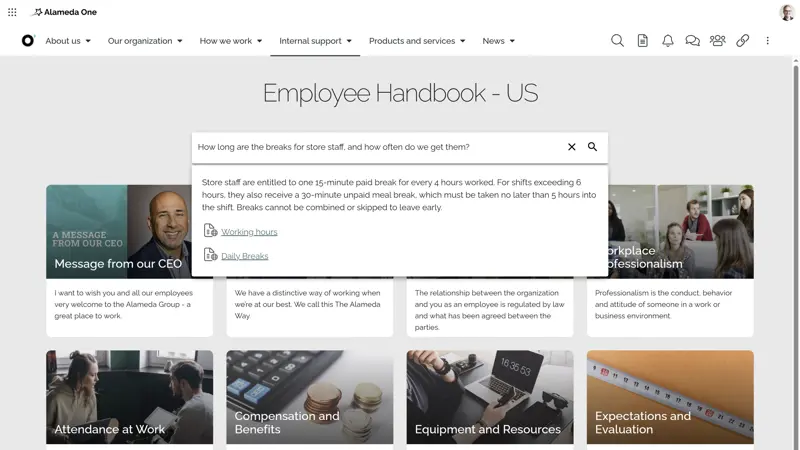
AI is beginning to support employee experience through smarter search, content recommendations, summarisation, and insight generation. However, the most successful platforms treat AI as an accelerator—not a substitute—for strategy, governance, or design. AI enhances the quality of experience when applied to well-structured, well-governed environments.
How organisations should use this information when planning employee experience
Employee experience outcomes depend on deliberate choices across platform design, governance, and operating models. When planning a new intranet—or evolving an existing one—organisations should consider the following practical checklist:
✔ Define employee experience outcomes before selecting features.
✔ Design intranet experiences around real employee scenarios and journeys.
✔ Prioritise usability, findability, and mobile access as experience foundations.
✔ Align personalisation with clear content models and governance.
✔ Measure experience through behaviour, feedback, and usage patterns.
✔ Treat employee experience as a continuous capability—not a launch goal.
Conclusion: Employee experience is an outcome—not a feature
Employee experience has become the central measure of intranet success, but it cannot be delivered through features alone. The 2026 market findings show that while most intranet platforms now position themselves around EX, meaningful outcomes depend on how well platforms integrate communication, findability, engagement, services, and governance into coherent everyday experiences.
For practitioners, the key takeaway is clear: employee experience is designed, operated, and sustained over time. Platforms that focus on clarity, relevance, usability, and governance consistently deliver stronger experience outcomes than those relying on surface-level engagement features or isolated improvements.
Learn more: To understand how employee experience connects with other intranet use cases and scenarios, explore the broader blog post about intranet capabilities and how they fit together going forward - or dive deeper into the related scenario articles on communications management, community and engagement, information finding and search, and AI in intranet platforms.
Explore the full 2026 intranet landscape
This article is part of a series analysing the key scenarios from the independent Intranet & Employee Experience Platforms 2026 report by ClearBox Consulting.
👉 To learn more about intranet trends, capabilities, and platform comparisons, download the full Intranet & Employee Experience Platforms 2026 report to benchmark intranet platforms across all scenarios.