
Intranet Planning Framework: Using Independent Research for Building Your Next Intranet
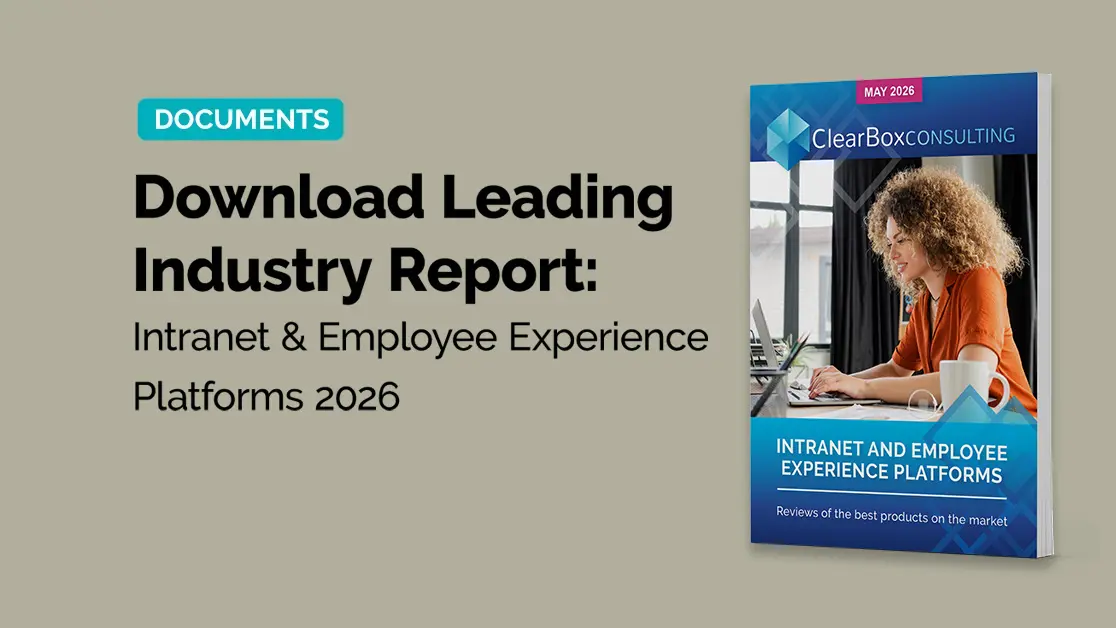
This blog presents a practical intranet planning framework built on insights from the Intranet & Employee Experience Platforms 2026 report. The article shows how organizations can define clear intranet requirements, align stakeholders, and make confident decisions by structuring intranet planning around eight proven scenarios.

Planning a new intranet—or modernizing an existing one—is a strategic initiative that directly impacts how employees communicate, find information, and get work done. As intranets evolve into employee experience platforms, organizations need a clearer way to define priorities, align stakeholders, and translate ambition into actionable requirements.
Rather than starting with feature lists or vendor comparisons, many organizations benefit from adopting an intranet planning framework based on real usage scenarios. This intranet planning framework focuses on how the intranet supports employees, communicators, frontline workers, and administrators in everyday work—not just what intranet platforms present in feature lists.
The annual Intranet & Employee Experience Platforms report contains an independent review of 20+ established intranet products, evaluated across eight comprehensive business scenarios. While primarily designed for product evaluation, these scenarios also form a strong foundation for an enterprise intranet planning framework, helping organizations define enterprise intranet requirements, prioritize within an intranet requirements checklist, and structure their purchasing, design, and implementation processes with confidence.
Learn more: Download Intranet & Employee Experience Platforms 2026 to see how Omnia and 20+ other products compare across this intranet planning framework.
→ Read more about scenarios, capabilities, and shifts within the intranet space in this summarizing blog post.
Intranet Evaluation Scenario #1: Employee Experience
What the scenario is about
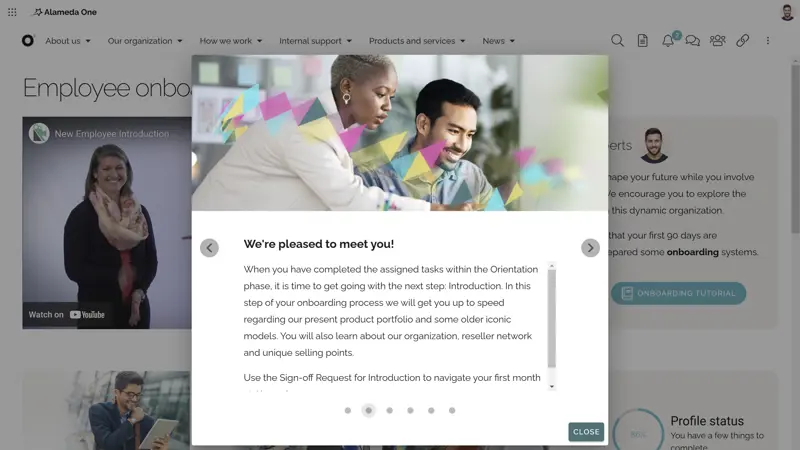
The term Employee Experience focuses on the overall perception employees have of how easy, effective, and meaningful it is to do their work, shaped by the tools, processes, culture, and support they encounter every day. In the report, this intranet evaluation scenario focuses on employee experience best practices and how intuitive the intranet feels in everyday work. It covers usability for frequent and infrequent users, personalization, notification management, multilingual support, and engaging content formats.
How to use it in your planning
Use this scenario to define experience-led enterprise intranet requirements as part of your intranet planning framework. Clarify what usability means for your workforce, how content and tools can be personalized, and how notifications are managed to avoid information overload and disengagement. Plan your next intranet to be intuitive, personalized, and task-oriented for best results.
Pro tip: When assessing employee experience, prioritize platforms that deliver a consistent interface across news, knowledge, and collaboration. A cohesive, personalized intranet experience reduces friction, shortens onboarding time, and drives sustainable adoption.
→ Learn more in this blog post about the employee experience use cases and capabiltities.
Intranet Evaluation Scenario #2: Communications Management
What the scenario is about
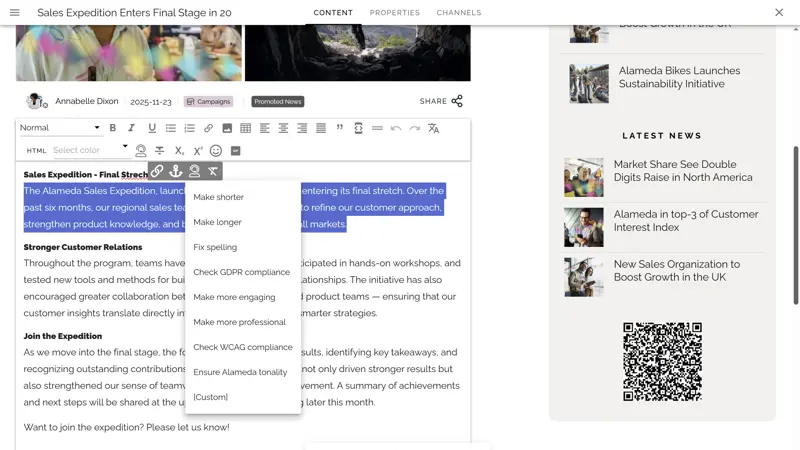
The term Communications Management focuses on the structured planning, creation, delivery, and measurement of internal messaging to ensure the right information reaches the right audience, on the preferred device or channel. This scenario examines how the intranet supports internal communications teams across that process, including communication planning and pipelines, news creation, editorial workflows, scheduling, campaigns, multichannel publishing, and analytics.
How to use it in your planning
Use this scenario to define requirements for an intranet for internal communications teams as part of your intranet planning framework. Clarify publishing roles, quality controls, planning visibility, and how communication effectiveness should be measured and improved over time.
Pro tip: Look for platforms that support both expert communicators and occasional contributors through templates, AI support, approvals, and guidance—helping maintain consistent quality without slowing down communication or increasing editorial overhead.
→ Learn more about shifts within communications management in this article.
Intranet Evaluation Scenario #3: Community and Engagement
What the scenario is about
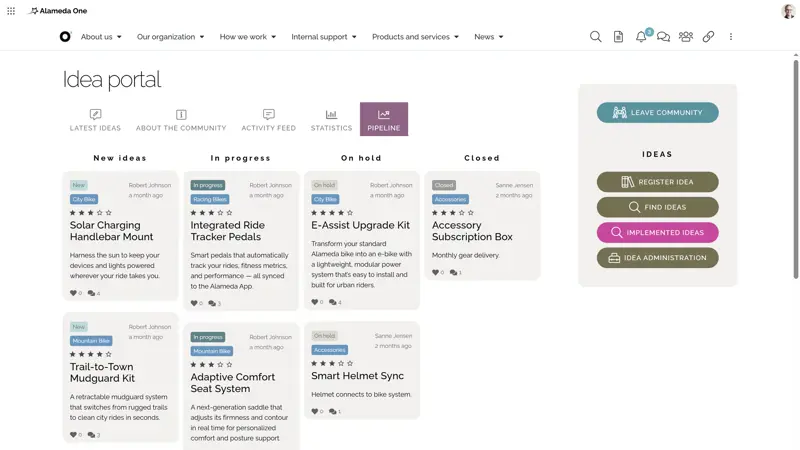
The Community and Engagement scenario describes how an organization enables employees to connect, share, participate, and contribute through dialogue, collaboration, and feedback that builds a sense of belonging. In the report, this scenario focuses on intranet capabilities that strengthen employee voice and two-way communication, including communities of practice, social reactions, comments, polls, ideation, and features that support engagement throughout the employee lifecycle.
How to use it in your planning
Use this scenario to decide how participatory your intranet should be within your intranet planning framework. Define where interaction adds value, how feedback is collected, and how communities are structured, moderated, and aligned with formal communication. Providing channels for employee feedback can significantly strengthen the intranet and drive adoption—but only if that feedback is acknowledged and acted upon through visible improvements.
Pro tip: Community features work best when they are embedded into the intranet experience, sharing the same targeting, branding, and governance as published content, rather than existing as separate or disconnected social spaces.
→ Learn more about community and engagement in this blog post.
Intranet Evaluation Scenario #4: Digital Workplace Integrations and Services
What the scenario is about
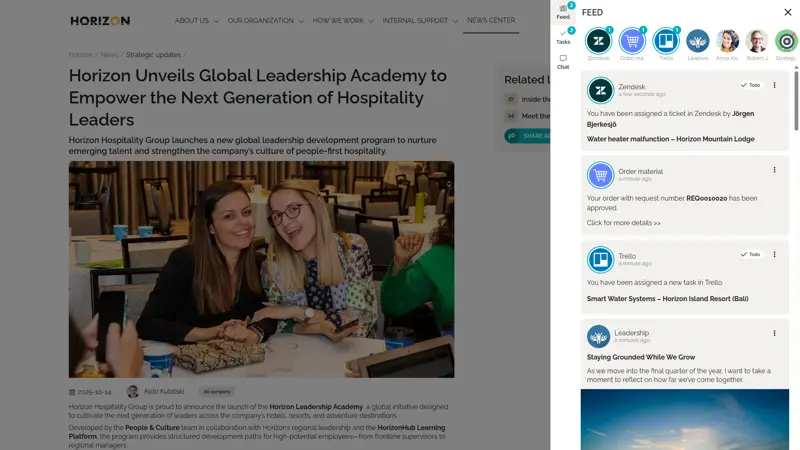
The Digital Workplace Integrations and Services scenario describes how effectively a platform connects tools, systems, and services into a unified experience. The goal is to enable employees to access information, receive notifications, and complete tasks from a central workplace. In the report, this scenario examines how well the intranet integrates with Microsoft 365 applications such as SharePoint, Viva Connections, Teams, and Copilot, as well as common business systems like ServiceNow, Workday, SAP SuccessFactors, Zendesk, and others.
How to use it in your planning
Use this scenario to define your intranet integration strategy as part of your intranet planning framework. Consider how your intranet should work alongside the most frequently used Microsoft 365 apps, which information from business systems should be surfaced, and which notifications are truly relevant. Also determine which self-service processes should be supported and where submitted information should be routed.
Pro tip: Instead of counting available connectors, assess how effectively tasks and notifications from multiple systems are consolidated into a single, actionable experience that helps employees focus on what truly requires attention. Also, evaluate whether tasks from business systems can be completed directly within the intranet.
→ Learn about where digital workplace integrations and services are heading in this blog.
Intranet Evaluation Scenario #5: Knowledge and Content Management
What the scenario is about
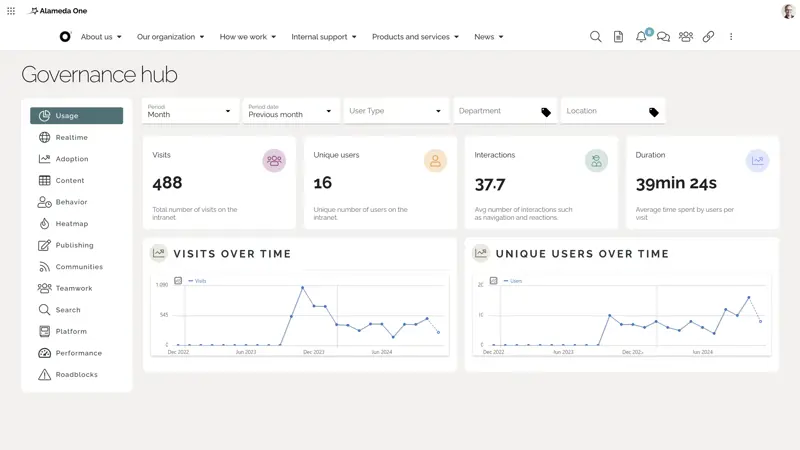
Knowledge and Content Management describes how an organization creates, governs, maintains, and delivers trusted information so employees can easily find accurate, up-to-date content to support their work and decision-making. This scenario focuses on structured, reliable information across the intranet, including reference content, official documents, urgent communications, content lifecycle management, and analytics that support governance and continuous improvement.
How to use it in your planning
Content management and governance are long-term success factors in any intranet planning framework. Organizations should therefore invest time in defining clear intranet content governance requirements, including information policies, ownership, review cycles, compliance needs, and how outdated or underused content is identified and managed over time.
Pro tip: Strong knowledge management depends on lifecycle control. Prioritize platforms that support structured content, review workflows, mandatory reads, and clear visibility into content quality and relevance. Strong governance capabilities make the intranet more sustainable in the long term.
Intranet Evaluation Scenario #6: Information Finding and Search
What the scenario is about
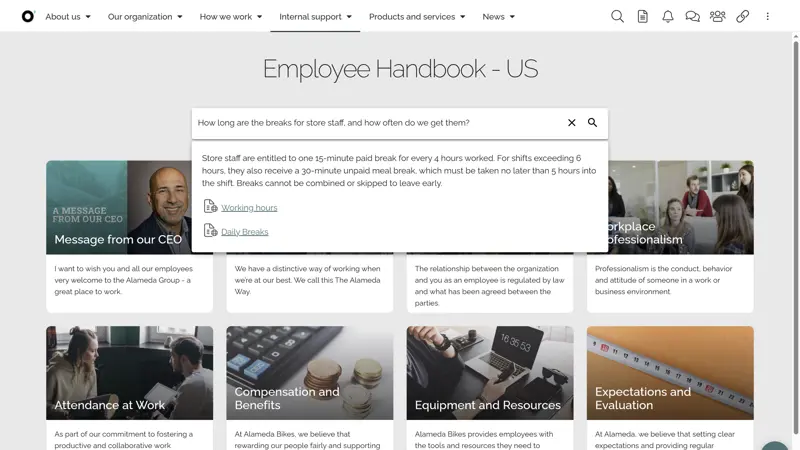
Information Finding and Search describes how effectively employees can locate information, people, and answers across the intranet and connected systems through intuitive search, navigation, and AI-assisted discovery. This scenario examines how platforms support information retrieval, including keyword search, people-finding, federated and enterprise search, AI-assisted semantic search, and search analytics.
How to use it in your planning
Strong intranet findability is a fundamental requirement within any intranet planning framework. Organizations should establish clear enterprise intranet search best practices, defining what information, tools, and people employees should be able to find, and setting expectations for accuracy, transparency, and trust—including how AI supports authoritative content rather than replacing it.
Pro tip: Treat search as a trust mechanism by combining enterprise search with AI-generated answers limited to verified sources. This helps employees find reliable information faster and builds confidence in the intranet as a primary starting point.
Intranet Evaluation Scenario #7: Mobile and Frontline Support
What the scenario is about
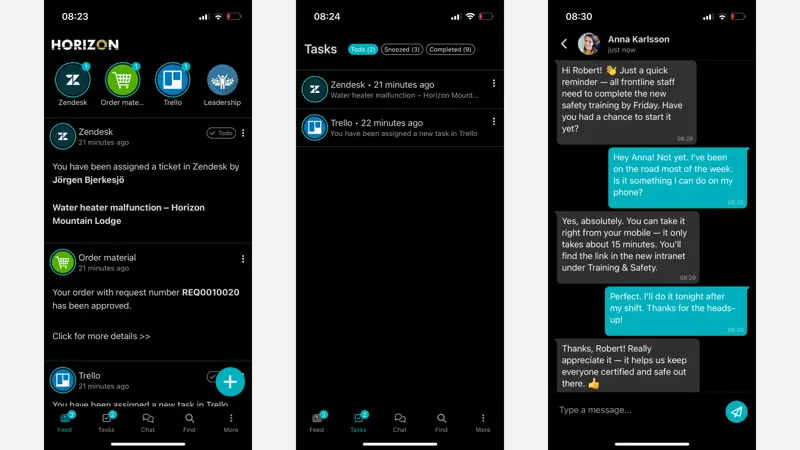
The Mobile and Frontline Support scenario describes how an intranet enables employees—especially deskless and frontline workers—to access information, communicate, and complete tasks effectively on mobile devices and shared screens, regardless of location or role. It covers access and enrolment, mobile user experience, frontline-specific features, integrations with business systems, and administrative controls.
How to use it in your planning
Use this scenario to define requirements for an intranet for frontline workers as part of your intranet planning framework. Clarify access constraints, device usage, attention spans, and the need for simplified, role-based mobile experiences that fit frontline working conditions.
Pro tip: For frontline employees, easy access and support for completing tasks matter more than visual sophistication. Look for flexible enrolment options and mobile experiences that can be tailored by role, location, or operational context.
→ Learn more about the scenario on mobile and fronline support in intranets.
Intranet Evaluation Scenario #8: Platform Management
What the scenario is about
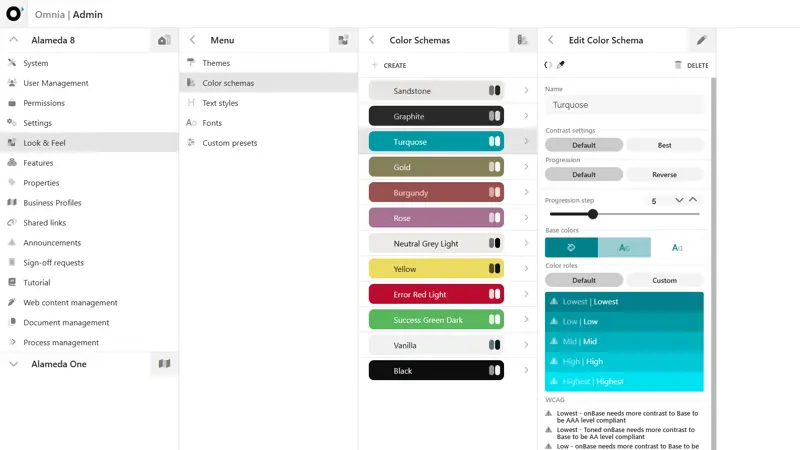
Platform Management describes how an intranet is governed, configured, and maintained over time. It includes administration, roles and permissions, branding, navigation, and adoption analytics in decentralized environments, ensuring the solution can be managed sustainably and governed effectively at scale.
How to use it in your planning
Use this scenario to define the overall structure of your next intranet as part of your intranet planning framework. Specify organizational policies, navigation models, landing pages, and the balance between central governance and local ownership. These decisions form the baseline of your enterprise intranet planning and long-term operating model.
Pro tip: A scalable intranet combines decentralized ownership with clear permissions, flexible branding, and actionable adoption insights that enable teams to continuously improve the platform over time.
From Scenarios to an Intranet Planning Framework
Taken together, these eight scenarios form a practical intranet planning framework that organizations can use to move from ambition to action. They help define enterprise intranet requirements, build a structured intranet requirements checklist, and align stakeholders across IT, Communications, HR, and the wider business.
By grounding your intranet initiative in real employee scenarios and a clear intranet planning framework, you reduce risk, improve decision-making, and lay the foundation for an intranet that delivers long-term value—not just a successful launch.
→ Learn more: Download Intranet & Employee Experience Platforms 2026 to see how Omnia and 20+ other products compare across this intranet planning framework.
→ Learn more: Read about AI in Intranet Platforms, the shifts, and what's coming next in this blog post.